Buy New Outboard Motors Now
Buy with assurance by selecting an licensed Canadian outboard dealer that shows proper credentials, manufacturer approval, and industry experience. Look for genuine manufacturer parts in stock, factory-trained technicians, proper maintenance and pre-delivery inspection, and verified serial number warranty. Insist on on-water demos with performance benchmarks, correct shaft and prop configuration, and itemized quotes breaking down engine, rigging, installation, and additional fees. Confirm parts supply and warranty repair completion period across the country. Stay clear of grey‑market imports and ensure proper horsepower specifications for your hull. Going ahead, you'll understand how to assess brands, financing options, and promotional timing.
Main Insights
- Check authorization from manufacturers and licensing in Canada, as well as business tenure; ensure factory-trained and qualified technicians and cross-country manufacturer parts availability.
- Request a written warranty connected to the engine serial number, including dealer authentication and a detailed pre-delivery inspection report showing software updates and sea-trial outcomes.
- Review reviews from Canadian customers for delivery speed, customer service communication, quality of after-sales support, and warranty claim responsiveness.
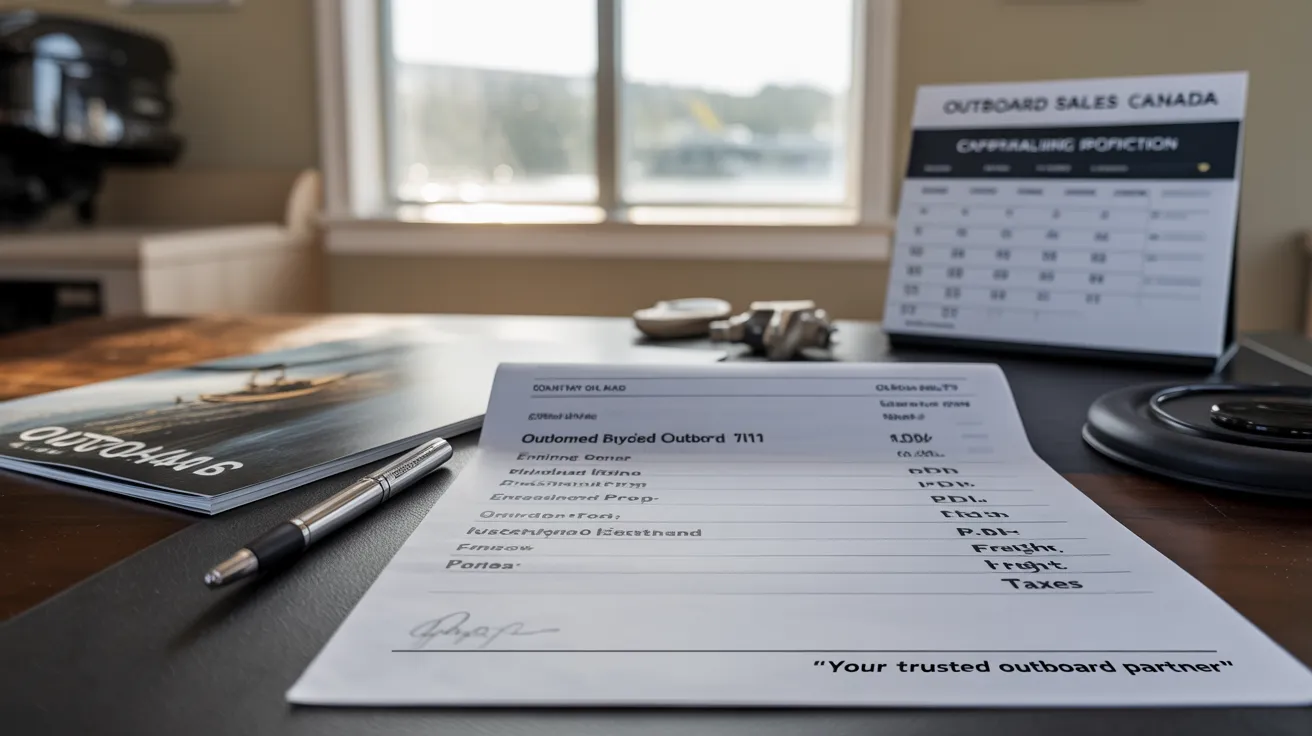
- Obtain itemized estimates breaking down all components including engine, installation, rigging, prop, PDI, documentation, taxes, fees, and freight; take care to stay away from unofficial imports not covered by official Canadian warranty.
- Verify proper sizing and configuration: ensure engine specs and shaft size fit the boat, confirm prop specifications, and check operational RPM and responsiveness under typical loading conditions.
Choosing Reputable Canadian Outboard Dealers
Although cost may be appealing, begin by confirming the seller's credibility and standing. Verify licensing status, brand certification, and time in business. Look through testimonials from buyers in Canada to ensure reliable service quality, punctual delivery, and transparent correspondence. Ask for detailed maintenance history for floor models and demonstration units; reliable sellers maintain records of service procedures, software updates, and warranty service.
Check product availability to avoid ending up held up through peak season. A trustworthy dealer delivers realistic ETAs, written quotes, and clear allocations. Review return policies and exchange periods in writing, including restocking fees and shipping responsibility. Evaluate spare parts availability, certified technicians, and turnaround times for warranty repairs. Look for detailed pre-delivery inspections, uniquely identified invoices, and documented guarantees. Select the dealer who shows reliability before, during, and after the sale.
Choosing the Perfect Engine Configuration for Your Boating Experience
Once you've checked out the dealer, it's crucial to choose the right motor for your specific boating activities in Canada. Start by examining your boat's hull, capacity plate, and regular payload. For those who often trailer or reach secluded waters, prioritize lightweight 2.5-9.9 hp four-strokes for better mobility. When seeking quiet waterway navigation, opt for midrange 25-60 hp EFI four-strokes including sound-dampening and convenient trolling idle control. If you're tackling rivers or large lakes with companions and equipment, choose 75-150 hp for rapid acceleration and keep stable cruising in choppy conditions.
Match a suitable shaft length based on your transom height (offered in short, long, or extra-long) and select the right gear ratio and prop pitch considering your weight and altitude. Remember to factor in options such as electric start, power trim/tilt, and the alternator output to maintain proper battery charging without extended idling.
Comparing Major Companies for Dependability, Energy Efficiency, and Protection
You should analyze every brand's proven reliability metrics-covering reliability scores, maintenance needs, and owner feedback-to make an informed decision. Carefully compare warranty terms and coverage scope in detail to evaluate who offers the best protection for parts, labor, and corrosion. Using concrete evidence on performance and warranty protection, you read more can choose a marine engine that minimizes downtime and ownership expenses.
Established Reliability Standards
For applications demanding unwavering reliability, quantifiable measurements distinguish Canada's top outboard brands. Be sure to evaluate standardized endurance hours, mean time between failures, and cold‑start success rates. Search for engines that demonstrate steady power output during strain tests, notably in the cold environments found on northern waterways. Advanced fuel delivery systems are crucial: uniform fuel dispersion enhances burning efficiency, minimizes deposits, and ensures reliable operation during all operating conditions.
Assess anti-corrosion properties with documented salt‑spray testing and inspect gearcase seal integrity after prolonged operation periods. Baseline noise and vibration measurements at cruising RPM demonstrate build quality and alignment. Documented service history indicate how frequently components and systems need attention. Finally, confirm replacement part supply and maintenance clarity-companies offering detailed troubleshooting information provide consistent servicing, protecting your time on the water.
Warranty Period Overview
Although reliability statistics reveal some insights, warranty duration demonstrates how confidently each manufacturer stands behind its engineering. When evaluating warranty periods, look beyond the basic numbers. Review protection tiers for mechanical parts, anti-corrosion, electronic systems, and workmanship. Some brands offer five-year comprehensive coverage with corrosion safeguards, while others divide the coverage-three years full coverage followed by limited parts protection.
Examine service claim protocols, also. It's important to have authorized dealers across the country, rapid fault assessment, and readily available parts within Canada's coastal and inland regions. Transparent maintenance requirements are crucial; overlooked services might invalidate warranty. Verify whether commercial and rental use modifies warranty conditions, and if warranty transferability supports resale value.
Lastly, align warranty coverage to operating time. High-hour anglers may do well with extended factory plans, while occasional boaters get protection with standard thorough terms.
Certification, Dealer Networks, and Authorized Service Matters
Before comparing horsepower or hull specifications, make sure to concentrate on certification, dealer networks, and authorized service to safeguard your investment and warranty. You want a motor serviced by factory-trained, certified technicians and a comprehensive Canadian dealer network that maintains OEM parts and adheres to brand service protocols. Always validate the dealer's status with the manufacturer and ask for written warranty documentation linked to the engine serial number.
Select companies with uniform diagnostic equipment, digital service documentation, and detailed maintenance schedules so you can get service anywhere without losing coverage. Request information on pre-sale inspection procedures, software patches, and post-setup sea-trial processes. Evaluate parts accessibility, service speed, and mobile service for outlying facilities. When you buy through an certified retailer, you secure appropriate setup, traceable maintenance history, and faster resolutions if issues arise.
Clear Pricing, Payment Options, and Seasonal Deals
Once you have authorization secured, concentrate on the actual costs and payment details. Ask for comprehensive dealer quotes that itemize the engine MSRP, rigging, controls, propeller, setup costs, PDI, freight, and documentation. Double-check environmental charges and tax rates before proceeding. Transparent costs allow you to compare various options by horsepower, capabilities, and warranty protection with no unexpected costs later.
To preserve your available funds, look into convenient payment plans through factory programs and dealer networks. Search for competitive interest rates, straightforward terms, and zero prepayment fees; confirm whether warranty coverage can be added with the loan. Plan your purchase around seasonal promotions and factory incentives-rebates, gift cards, or equipment packages often emerge in late winter and early spring. Reserve your chosen inventory ahead of time, then get the promotional price guaranteed through written confirmation including deposit terms and delivery timeline.
Key Considerations and Buying Tips for Canadian Waters
Safeguard your purchase by steering clear of grey‑market imports that are missing Canadian warranty coverage and compliant documentation. Be sure to pair horsepower to your hull's rating and usual load for consistent performance without straining the transom. We'll explain the way to confirm authorized sourcing and choose the right power range for Canadian waters.
Stay Away from Grey-Market Items
While bargain listings can appear tempting, grey‑market outboards typically result in higher expenses in the long term. Grey imports may circumvent Canadian certification, emissions standards, and dealer preparation, resulting in compatibility problems with local fuels, rigging, and diagnostics. You risk warranty coverage gaps since manufacturers typically support guarantees exclusively via official Canadian channels. Parts availability can be unreliable, software updates might be restricted, and recall support remains questionable.
Safeguard your acquisition by checking the model's Canadian SKU, serial number, and build year with an authorized dealer. Ask for a documented manufacturer warranty, PDI checklist, and proof of Canadian compliance certifications. Ensure that the ECU is region‑coded for Canada and that maintenance records begins at a authorized dealer. If uncertain, walk away and buy through the authorized network.
Align Power with Hull
Before selecting horsepower, pair the engine to your boat's hull characteristics including mass, hull angle, and planned cargo to ensure proper planing and safety. Always review the boat maker's recommendations and keep within the recommended range; underpowering causes slow takeoff, while excess power puts stress on the transom and nullifies guarantees. When dealing with Canadian chop, thrust is as crucial as peak velocity.
Verify shaft length aligns with transom height to maintain the anti-cavitation plate close to the vessel's keel line. A mismatch can lead to cavitation, spray, and steering issues. Select the right propeller parameters-diameter and pitch optimized for wide-open throttle RPM under standard load conditions. Conduct tests with your usual fuel, crew complement, and equipment. Select four-stroke EFI motors with corrosion-resistant design, and insist on dealer sea-trials and documented rigging measurements.
Common Questions
Understanding Provincial Taxes and Fees in Outboard Motor Pricing?
Government charges affect your final outboard motor cost by incorporating required taxes and environmental charges to the base MSRP. You'll need to pay applicable provincial and federal taxes, plus fees covering documentation, recycling, and component disposal. Various locations implement special thresholds for luxury items or accessory disposal. It's recommended to ask for an itemized quote, confirm that destination and PDI charges aren't duplicated, and investigate qualifying discounts to optimize your overall investment with clear documentation.
Required Documentation for New Outboard Registration in Canada
Just like preparing a toolbox, you must gather particular documents when registering a new outboard in Canada. You must submit evidence of purchase (such as a bill of sale), official identification, the engine's serial number, and original manufacturer paperwork. To register the title, provide boat information and Canadian address verification. If the purchase is financed, submit lender documentation. Complete the provincial/Transport Canada application, provide necessary signatures, and maintain digital copies. This ensures smooth processing, preserve future worth, and guarantee proper registration from the beginning.
Is the Warranty Transferable When I Sell My Boat or Motor?
The boat or motor's warranty can typically be transferred, but it's dependent on the manufacturer and registration details. To guarantee warranty transferability, reach out to your dealer or the manufacturer before completing the sale, check for any applicable fees, and complete the necessary paperwork. It's necessary to have proof of ownership, initial purchase documentation, product serial numbers, and service history. Make sure to register the new ownership within the required period to keep coverage active. Maintain detailed service records to preserve warranty coverage and market value.
How Do Outboards Manage Winter Cold-Start Performance?
They start dependably if you prep correctly. For cold weather operation, you should use electronic fuel injection or choke enrichment, a fully charged battery, and clean fuel. Optimize battery efficiency by ensuring secure battery connections, choosing the right battery capacity, and keeping the battery warm if you can. Prime the fuel bulb, turn the key to build fuel pressure, then start in brief intervals. Use fresh winter-grade fuel, a 10W-30 or 5W-30 marine oil, and allow the engine to stabilize at idle before applying throttle.
Are There Insurance Implications for Specific Horsepower or Modifications?
Insurance companies often calculate coverage eligibility and rates depending on boat alterations and HP. If you exceed insurance coverage limits or install performance enhancements, you'll have to get modification coverage riders for proper protection. Always declare precise engine power, computer modifications, prop alterations, or lift plate additions. Insurers may request inspections, photos, and receipts, then modify deductibles or navigation restrictions. To maintain coverage and warranties, maintain installation documentation, follow manufacturer guidelines, and inform your insurer prior to sea trials or boat sale.
Key Takeaways
You've got the blueprint, first vetting dealers, matching horsepower to your marine environment, and analyzing brands for dependability. Remember to demand certified service, get transparent pricing, review financing options, and time purchases with Canadian seasonal deals. Steer clear of gray-market engines and unclear warranty terms. Take these actions, and your new outboard will operate flawlessly - comparable to a Swiss watch with Bluetooth. When ready, request written quotes, confirm serial registration, and arrange your first service. Trust this process, and you'll start with certainty and long-term value.